[00:00] Intro — the 3 ways to get your A&P
Hey, everybody. Welcome to grease pilot. My name is Michael Sawyer. Thanks for stopping by. In this video, we're gonna talk about how to get your aircraft mechanics license here in The United States. Now the most widely accepted certification for that is the A and P license or the airframe and power plant mechanics license. Getting your A and P license in The United States can happen one of three ways. And in this video, we're gonna go through each of those three steps. As you guys know, I got my clipboard. This is not a scripted video. This is something that I use to keep myself on track and follow all the topics of today's video. As you guys know, here at Grease Pilot, we are all about practicality. So it's hard to steer away from regulation sometime, and we will cover some of that in this video. But we also want to be real with you guys and tell you exactly what it's like to get your a and p license in the three different ways to do that. There are many videos online about how to do this, but this is what we are trying to do the best is to show you the practical way of how to do it. Some have their pros, some have their cons, and we're gonna discuss each one of... Or some of the pros and cons for each one in this video. Okay. So let's just take a look here and see what we got on the agenda. So as I said, it really takes... It boils down to three methods to get your A and P license. That's how I'm going to refer to the license, but it it means your aircraft mechanics license. And I won't try to veer too much off topic because we're gonna stay focused on getting how... The ways to get the license. We're not gonna go into detail about the a and the p and what you can do with that. That's in another video. This is simply just how to get your aircraft mechanics license. The three ways to get your aircraft mechanics license are go to a FAA
[02:00] Overview of the three methods
part one forty seven certified school, go through the military and gain the experience to get your A and P license, or gain the experience through civilian ways or what I like to call on the job training, OJT.
[02:33] Method 1: FAA Part 147 School
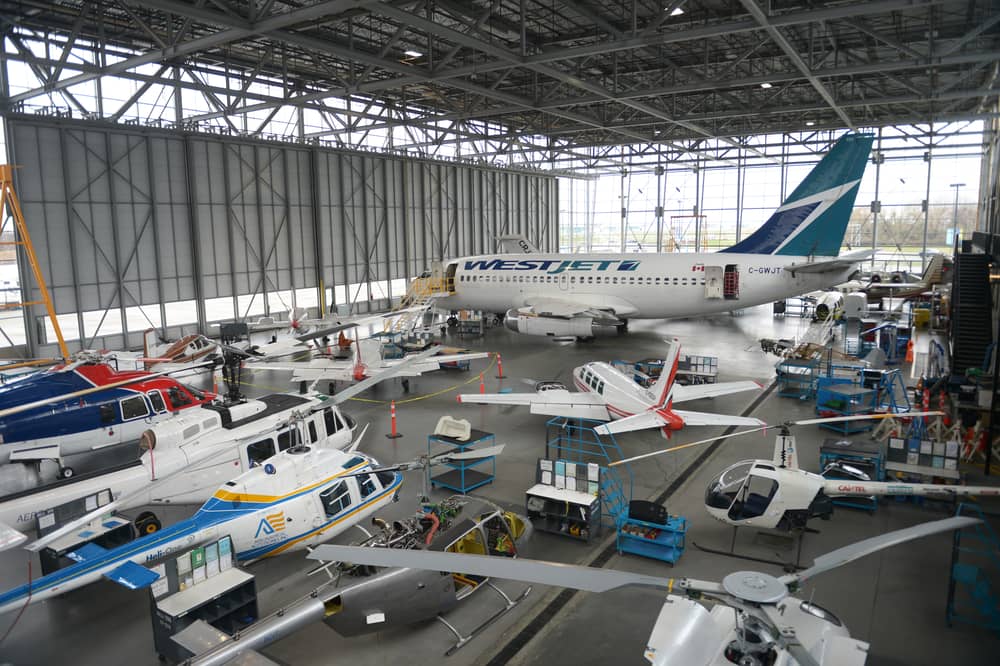
So we'll break down each one of these a little bit, and we'll start with the part one forty seven school. So right off the bat, this is the most common way that people... When people think of getting their aircraft mechanics license, I think by volume of people, they think this is the way to go. This is the only way to go sometimes. And it is... It's got its pros and cons just like the other other couple methods. This is where you go to a structured school just like any other school where they will have a curriculum that's been approved by the FAA. Now the school has to be FAA part one forty seven certified to be able to get your license in this way. So the FAA essentially looks at an entity, and they will look at their curriculum, their facility, their instructors, the training material, the training aircraft tools, and they will certify the school and go through a process with the FAA. It's a lengthy process, but it is... It's what certifies the school to be legitimate. So
[03:43] Part 147 — the pros
the pros of this school... Or let me back up and say this. This is how I got my license back in 2009. It's been a while. A few things have changed, but the core fundamentals have stayed the same. I think the biggest change is the way that you get certified. The standards have changed from, PTS, practical test standards, to ACS, airmen certification standards. Not in this video, but that is one big change that's happened since I got my A and P license. But to go back to the one forty seven school, the pros of this are you have a structured learning environment. You show up, you go through a curriculum, and you go home with some homework. You do your homework. You come back, and you wash and repeat this. That is... It's just like a school. So there's not much... There is effort on your part. That's not... It's not true to say there's no effort, but there's not as much, you don't have to be as resourceful in putting all your experience together to take to the FSDO, which we'll discuss about the other options. This is a show up, go to school, do the homework, study, and pass the test. That is what is the beauty of the one forty seven the way that... The beauty of the one forty seven school option. Another pro is that it can be on a shorter timeline. So it just depends, but schools are typically two years. There are some accelerated schools out there, and I will say you get what you pay for. If you wanna get your A and P license as fast as possible, as cheap as possible, there are schools that will do it less than two years. The quality of your training may be in question with those, so it's just whatever you wanna do. It's your situation. Another pro of a part one forty seven school is the broad range of subjects you're gonna learn. So since it's a curriculum and it's been evaluated by the FAA, you're gonna be able to cover every subject and all the materials of being an aviation mechanic, hardware, plumbing, airframe structures, power plants, accessories, propellers, avionics, communications, all of it. You're... And it goes on and on and on and on. So you're gonna get a broad range of subjects, and you're gonna go through each one as the curriculum shows and it's... That's a pro because you're gonna have a structured learning environment.
[06:10] Part 147 — the cons
Okay. So now that we've talked about some of the pros of the one forty seven school, let's talk about some of the cons. And by the way, guys, this is how I see it. This may not be a con for you. These pros may not be a pro for you, but I'm just describing how I'm looking at this. It's it's ultimately up to you to decide which option is best for you. So some of the cons of a part one forty seven school. It's the highest cop... Cost option. More than likely, you're gonna spend the most amount of money with this option. It's a bigger commitment. So it's a tie. Most schools are on a schedule. You have to follow that schedule. You have to go into the school to do the practical side of the school at least. And so these are fixed things that you really don't have much flexibility on. As with all of these options, your quality of training is gonna depend heavily on the instructor or instructors. So it doesn't matter if you get this... Your A and P license through a school, through the military, or through the civilian OJT side. The person who's teaching you is gonna have a great impact on the quality of your training and ultimately, your being a... You being a mechanic early on. Your early stages of being an actual certified mechanic. Okay. Let's keep looking at some of the cons here. I think we're getting close to being at the... Oh, this is a big one. So typically schools, not all schools, but most schools don't get you as much real world experience. By that, I mean, these schools have these planes and projects inside a hangar. You're gonna go to the school. You're gonna wrench on these airplanes, but these airplanes rarely go back to service. Some schools have programs where they're working on airplanes that are maybe a flight school or something else where the planes actually go back into service. So one of the cons that I found about school and ex... Especially with the school I went to, it wasn't... Let me back that up. My school was great that I went to. I went to Indian Hills here in Iowa down in Ottumwa. I loved it. It was a great experience. I highly recommend it. But we didn't get as much experience on real world aircraft. I can't think of even one time where I was working on a plane that was gonna be returned to service during school. Not Indian Hills fault, nobody's fault. That's how most these schools are. So not much real world experience. And there is a difference between working on an airplane that's never gonna fly again versus a airplane that is gonna get returned to a flying state and go carry passengers. You build a certain quality control, and, it's hard to even describe it. You you have to make sure it's right. And that that, skill of working on actual airplanes is a true skill that actually go and fly. So I'd consider that a con to the one forty seven school. Okay. Let's move on to the next
[09:05] Method 2: The Military Route (MOS & FSDO)
option of getting your A P license. That's option number two, and that is getting your A and P license through the military. This is... I hope to not really go too in-depth. It's it's hard for me not to go in-depth because I wanna be helpful. I think the key here is to be consistent. So the military has its pros, has its cons just like anything else. I'm gonna start by saying, if you are currently in the military, this is the best option to get your A and P license. You're gonna look at your MOS or all of your MOSs, see which ones apply to getting your A and P license because... Let me back it up. The military operates under a different framework than the civilians' world. So the military calls all their, positions MOS. So, like, if you are an aircraft maintainer, your MOS may be aircraft maintainer. There are other MOSs that qualify you to get the experience on the civilian side to get your A and P license, but there is a conversion process. And you... Ultimately, the FAA, that's the civilian governing agency over all aircraft mechanics in the civilian world, has to buy off on your military experience. So there are a couple ways that you can get the military experience to take to the FAA a FSDO office. That's flight standards district office. These are FAA controlled offices around the country. There's usually one per state. There's sometimes two per state, and you're gonna find the one that is covering your region. So if you're already in the military, I recommend doing this option. You're gonna see if your MS qualifies. And one of the ways you can do that is by looking at figure five dash one three eight in FAA order 89 dot one volume five chapter five section two. Now I I don't like siding stuff because it's so dry, but there isn't... If you Google that, and I'll put a a link below or about this. If you Google that link, you can get the list of MOS occupations and see what qualifies to... For civilian A and P experience. So this... You need to get eighteen months to get either the a or the p or thirty months of experience to get both the a and the p. So I hope you guys understand what I'm saying there. I highly recommend just getting both, and most people will tell you to get both. There are jobs out there where you can be an airframe mechanic only, and there are jobs out there where you can be a power plant mechanic only. But there are way more jobs out there where you have to have the a and p. So we highly recommend going for both. And in that case, you need thirty months of experience. So if you're in the military and your MOS qualified for thirty months of experience to be an A and P, you you bundle all this experience together. You take it to the FSDO. You show them. There's a ASI, an air within this safety inspector at the FSDO. It's a guy that is gonna look at your information, your experience, and sign your application to be able to test to become a FAA mechanic or an A and P mechanic. Okay. So I hope I didn't lose anybody on that one, but if you're in the military already, I highly recommend just looking at your MOS, seeing what qualifies. Okay.
[12:42] The JS-AMTCC military program
I'm gonna briefly touch on the JSAM TCC, which is the military's program where you enter this program. And once you complete the program, you get a certificate of eligibility and you get a completed form c g dash g dash e a e two dash two so if you go through the military follow all their steps you'll get these certifications this the certificate of eligibility, take it to the FSDO, the FAA, once again, and it's faster for them to evaluate your criteria. They basically just sign your application. They don't review too much of your experience because they see that you've entered into the JSAM TCC program. You're done with it. They say he's good to go. He's ready to go. So it's a little faster if you're doing that program through the military. I think from what I've researched, the cons are it's probably a little complex. The military does a great job of making things complex. I love our military. I love everything about it. I think our government in general makes things a little complex sometimes, so I will say that that's probably one of the cons. But if you're consistent, that could be a good program, a good option. Okay. So like I said, you can either not... And you don't have to do that option if you're in the military. You can get all your information, all your MOS. You can go to your supervisor in the military, get all your MOSs, put them together, put a package together, and then send that to the FSDO, the FAA SI, and say, am I eligible to test for my AMP? They will evaluate that too. So you don't have to be in the JSAM TCC. Let me review some of my notes here to make sure that I'm covering everything.
[14:36] Building your military experience package
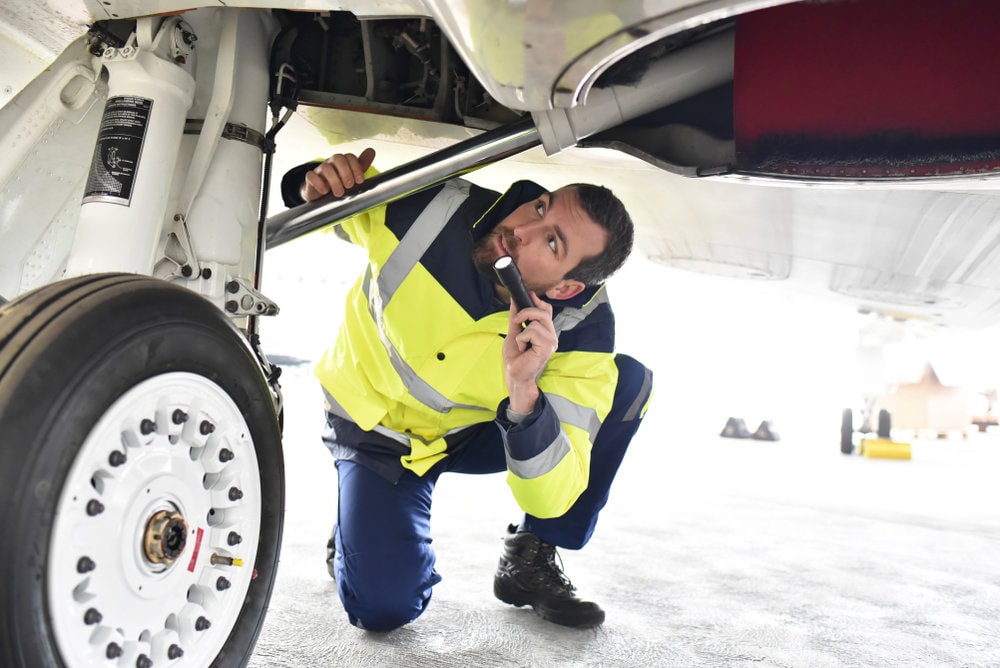
So I'm gonna just briefly touch on this document package. If you don't do that JS AMTCC program in the military, what you should put together as documents to take to the FSDO. You're So gonna want a valid form of picture ID. And, honestly, I would email or call the FSDO first. Tell them what you want. There'll be some back and forth, but you're probably gonna email them this package. You could, depending on if you wanna drive in or if they want you to drive in. So you need a picture ID, maybe a scanned one of your state driver's license, a completed form DDDash214 with your MOSs identified. And if you don't have room to put all your MOSs on there, then you're gonna wanna I think you're gonna want to make sure you get your supervisor's contact information for all your MOSs, and you're gonna want a letter from each of them. And we'll put some links below of some template letters and maybe some more resources to help you get through this. That's our goal here at GreasePilot is to help you get through these processes. So hit us up if you need help with anything. But you're gonna wanna get letters from your your supervisor or executive officer that can say, hey. He was this MOS from this date to this date. He he was doing that, and I sign off saying that I was his supervisor at that time. That will be the experience package that goes to the FAA. So you're gonna want written letters from each of your supervisors in this document package as well. And then if you've had any training, any transcripts of any military training that relate to aviation, throw them in there too. You can't ever have too much, documentation. So there you go. Put that... Put all that documentation together. You need to meet the thirty months of experience to get the A and P. Eighteen months if you only wanna get one of those. Send it to the FAA. Let them evaluate it. This is a this is a good point. So let's say you're out of let's say you're out of the military and you wanna go back and recover your stuff to find out how much experience you have. Let's say you get your experience from the military and you find out, hey. I don't have enough to qualify for my EMP. You can take that experience, then get the rest in civilian, experience, and then bundle that altogether and send that package into the FAA. So it's not, you need to get everything in the military. You can exit the military, take that experience, and it can bite off a chunk of the experience needed to get your A and P. I know this sounds like kinda a lot, and it truly is. And rightfully so. The FAA wants to ensure that the people working on airplanes are qualified. So when you get your A and P license, you're gonna be certified to be able to work on all types of aircraft in The United States and abroad because a lot of countries recognize the A and P license as a highly rated license. So small piston aircraft, corporate aircraft, we call that GA airplanes. That's where most of my experience is. You're gonna be able to work on that stuff. You're gonna be able to work on helicopters. You're gonna be able to work on airliners, and the list goes on and on. So, like, you gotta make sure that you're... The FAA wants to make sure you're qualified. That's why it may sound like a lot, but it's not hard. It's just a little bit at a time a little bit at a time, and eventually, you have it all and you're taking your test. So let's jump into the last
[18:13] Method 3: Civilian OJT / Field Experience
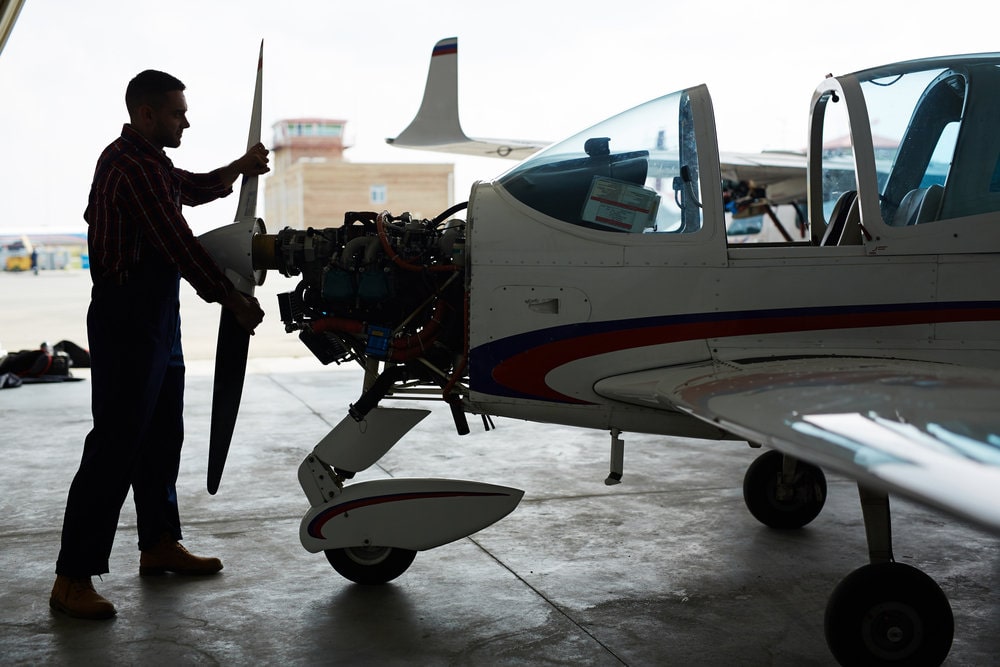
option of getting your A and P license, and that is through OJT or through the field experience. So let's talk about some of the pros and cons first. With this option, you have a lot of flexibility. So you can... There are many ways to get the experience in the civilian world. You can go down to a local airport, hook up with a single certified mechanic that works on airplanes, and be a mentor under him and figure out a schedule with him. It can be part time, full time. It's whatever you two decide. Or it can be an apprenticeship with a large company like an airline or a repair station. So there's a lot of flexibility with this option. Now with this option, you're gonna have to meet the same experience requirements, which is thirty months of experience or eighteen months of experience just depending on if you want the full A and P or just one license. Another note is that you're gonna need to cover at least 50% of the ACS subjects. While I was doing research for this, I found that an an FA document that says they're gonna make sure you you have at least 50% of the ACS subjects. So make sure that you at least hit that that mark.
[19:28] Documenting hours & digital sign-offs
With this option, documentation is one of the cons, but you can you can work around that. If you want flexibility and that's one of your key things to get your A and P license, then this is not a big deal. So with the documentation, you just need to make sure that every time you work on an airplane that you record it, date, time, length of time that you worked on the airplane, make, model, what you did, and get your supervising A and P to sign off. GreasePilot has a digital way of doing that, and we also allow you to attach pictures to the log entry. So that's a great way of even putting more more details into each log entry, which the FAA loves. So I think it's super important. I've... As I've supervised, apprentices over the years, what typically happens is we go out there, we work, and then the the apprentice builds up a log of all these entries and then comes to me maybe a month later and says, hey. We need to sign all these entries. So, like, entries from a month ago. We got into a routine of doing it weekly, but that was early on. That's kinda one of the hurdles we had to, go over because as someone supervising, your supervisor's busy with a lot of things. He's making sure he's meeting FARs. He wants the quality of work to be good. Depends on if he's a manager, if he's got other people. He's dealing with customers. They're busy. So a lot of times, the apprentice makes the log entry, but then doesn't get the signature from the the, the supervisor. Make it a daily routine of when you clean up your tools at the end of the day, you fill out your log, you find your supervisor, you say, hey. Here's a log of what we did today. Review it and sign it, please. Okay? At minimum, do that weekly. Okay. So let's move on. This option is similar to the military option in in the sense that you're gonna gather all your... Once you meet the thirty months experience or eighteen months, you're gonna gather all your documentation to a package and you're going to send it to the FAA. So... And then they'll evaluate it. So some of the things that you put in this package include personal maintenance logs detailing tasks performed, supervisor signed OJT records, employer letters on company letterhead verifying employment dates and work performed,
[21:59] Your OJT experience package for the FAA
pay stubs w two showing employment at a maintenance facility work order showing tasks performed and training certificates you don't need to have all those but the what they're saying is all this stuff helps you to build the case that you have the experience. So... And and our software organizes this onto a nice package, PDF package that you just give to the FSDO. You don't need something like that, but it's there. It's convenient. It's nice. It's professional. But at at a minimum, you need to make sure you save all this stuff, whether it's documents or PDFs or whatever. Save it and make sure you build the package to give to the FA. If you guys have questions on any of that stuff, give us a shout. This is also another
[22:47] Part-time flexibility & how the FAA counts hours
important note about this option. With this option, one of its greatest strengths is flexibility. So you can work at this part time, full time, doesn't matter. The FAA is going to evaluate the experience based on a hundred and sixty hours per month, forty hours a week, a full time schedule. So let's say you did it part time and you did it for three years, but you only worked twenty hours a week for those, thirty months. Sorry. I said three years. Say thirty months. You work part time. You only do twenty hours a week for those thirty months. You send your documentation in. They're gonna wanna see the hours worked, and they're gonna see it and go, hey. You don't meet... You weren't working full time, so they're gonna add the time to the end of that. So just be aware of that. But the turnaround to this is this. If you're a busy person, if you have a full time job, if you are doing something else and you just wanna get this over time, maybe three years, maybe four years, or you can get it in thirty months still. You can just do it full time and get it in thirty months. But either way, it's got the flexibility to do that. You can pause too. Let's say you go and you work with a mechanic and then you stop working with that mechanic. The experience you have with them stays with you. It'll go to the next mechanic or the next company. That's why the documentation side is so important. You just save it and it can pick up right where you left off. So that's key.
[24:18] Summary of all 3 paths
Okay. I think it's good that we just do a quick summary of the three the three ways we talked about today, some of the highlights, and let's just get into it. So we covered the three ways to get your A and P license. That's an A and P school or part FA, part one forty seven certified school. You can go to the military. You can join the military for free. You don't have to pay them. They'll pay you. And you can gain all the experience there, which is not a bad option. And then... Or you can gain... The third option is you can gain the experience through OJT in the civilian in the civilian, world. So... And I'm gonna mention this too. You can do a combination of those things. The school is pretty much you go to school, you finish school, but the military and OJT, civilian OJT, you can do both those if you want. So three ways to get your A and P. Another highlight, the quality of your training depends heavily on your direct supervisor, civilian supervisor, military supervisor, or one forty seven school teachers. That's so important, but I want... If you don't feel like your your supervisor is giving you quality training and you want a higher quality environment, then maybe it's time to stop and say, hey. I would... Let's try someone else or something else. With the OJT, in the school and military, you're probably not gonna have as much flexibility there. But with the civilian OJT route, you definitely do. It's all about you. If you sign a contract with somebody, you gotta look at that contract, but you're not... You don't have to sign a contract if you don't want to. It's up to you. So I'd say that one probably has the most flexibility with if you don't like your situation changing it and it's not gonna cost you too much.
[26:08] The FAA test is the SAME for every route
Okay. This is a big one. I didn't touch on this throughout any of the video, but the testing to get your A and P license is going to be the same no matter what option you go through. So the actual FAA test, the writtens, the orals, the practicals are the same no matter which option you choose. Okay?
[26:29] Cheapest vs. most flexible
If you're looking for the cheapest way to do this, the school is probably gonna be the most expensive. The military is gonna be the highest commitment probably. OJT is gonna be the most flexible, but you're gonna need a system to make sure you document things correctly. So that's the con of the OJT. It's not as structured. Here at grease pilot we put a system together to help with that but if you're going on your own you're gonna have to figure out the structure the pathway all that so that's kind of the high points of each one I think
[27:01] Free A&P aptitude test + the lowest-risk start
I I think the last highlight that I'd like to cover is, let's say you're on the fence about this thing. You're not really sure if you wanna get your AEP or not. Take an aptitude test that was created by us here at Grease Pilot. Free. Doesn't cost you anything. But the key here is that you'll find out what your aptitude is to being a mechanic. So that would be one of the first things I would do if you're kinda on the fence about this. The other thing is that if you wanna go to the next level on that, it would be to do some OJT work in the civilian world. With that, you don't have to sign up to the military. You don't have to commit to a school, and you can just see what it's like to work on airplanes for a little bit. So I would say that's probably the lowest risk way of getting involved in this, but that's for all you folks that are kinda like on the fence and just not sure about how to do this thing.
[27:56] Wrap-up
And I'm looking here at my notes and looks like we're at the end. So that's a wrap on how to get your A and P license. We covered the three different ways. I hope you guys got some value out of that. If you have questions, concerns, input, corrections, drop us a line. We would... We'd love to hear from you. I'd love to see where you're at on your journey and how I can help you. And with that being said, once again, thanks for stopping by. My name's Michael with GreasePilot, and we'll see you next time.